


(Without burning out or turning into a productivity influencer)
TL;DR: 7 Habits for Novel Productivity
✅ Stop treating "write my novel" as one giant task
✅ Use 20-minute sprints (not 3-hour marathons)
✅ Build characters before forcing scenes
✅ Get your story OUT of your head (use visual tools)
✅ Write in short sessions (not "free time")
✅ Lower the bar to ONE sentence
✅ Track progress without guilt
Read on for the full breakdown ↓
Let's be honest.
Trying to stay productive while writing a novel can feel impossible some weeks. Not because you're lazy. Not because you "don't want it enough."
But because writing a novel is mentally heavy.
It's characters. Plots. Backstories. Emotional arcs. Loose threads. Your brain ends up juggling 40 tabs at once.
And the worst part? Most productivity advice online is built for entrepreneurs and gym bros, not novel writers building fictional universes.
So instead of pushing harder, here's what actually makes writing feel lighter.
Why Writers Struggle to Stay Productive While Writing a Novel
Before we jump into habits, let's talk about the real problem.
Writing a novel isn't just typing words.
It's:
Managing character arcs
Tracking emotional continuity
Remembering who knows which secret
Keeping timelines consistent
Making sure tension rises instead of flatlining
That's cognitive overload.
Most writers don't struggle with discipline. They struggle with decision fatigue and story complexity.
When everything lives inside your head, productivity drops. Not because you lack motivation but because your mental bandwidth is maxed out.
That's why staying productive while writing a novel is less about grinding and more about reducing friction.
Now let's get practical.
1. Stop Treating "Write My Novel" Like a Task
"Write my novel" isn't a task.
It's a stress response.
Productive writers don't sit down to "write a book." They sit down to:
Write one messy scene
Fix one character inconsistency
Add tension to one conversation
Brain-dump notes for Chapter 8
Momentum doesn't come from finishing everything. It comes from finishing something.
If you want to stay productive while writing a novel, always know your smallest next action before opening your draft.
2. Use Micro-Sprints (Because Willpower Is Overrated)
Real writers swear by short writing sprints.
Not "I'll write for three hours."
More like: "I'll write for 20 minutes."
Set a timer. Write badly. No editing. No judging.
When the timer ends, you're allowed to stop.
Most of the time? You won't want to.
Short bursts reduce pressure. And pressure is usually what kills consistency.
3. Build Characters Before You Force Scenes
If you're staring at a blank chapter, it's rarely about discipline.
It's usually because you don't fully understand the people inside the scene.
When your characters feel real:
Dialogue flows faster
Conflict feels natural
Decisions make sense
On low-energy days, don't force prose.
Instead:
Refine a character flaw
Clarify someone's motivation
Map a relationship dynamic
You're still working on the novel. Just in a different mode.
And that still counts.
4. Externalize Your Story Brain
Your head is not storage.
Trying to remember:
Who knows which secret
Who secretly hates whom
How two side characters are connected
...is exhausting.
That mental overload is what makes writing feel heavy.
Get it out of your head.
Map relationships. Track arcs. Write things down visually.
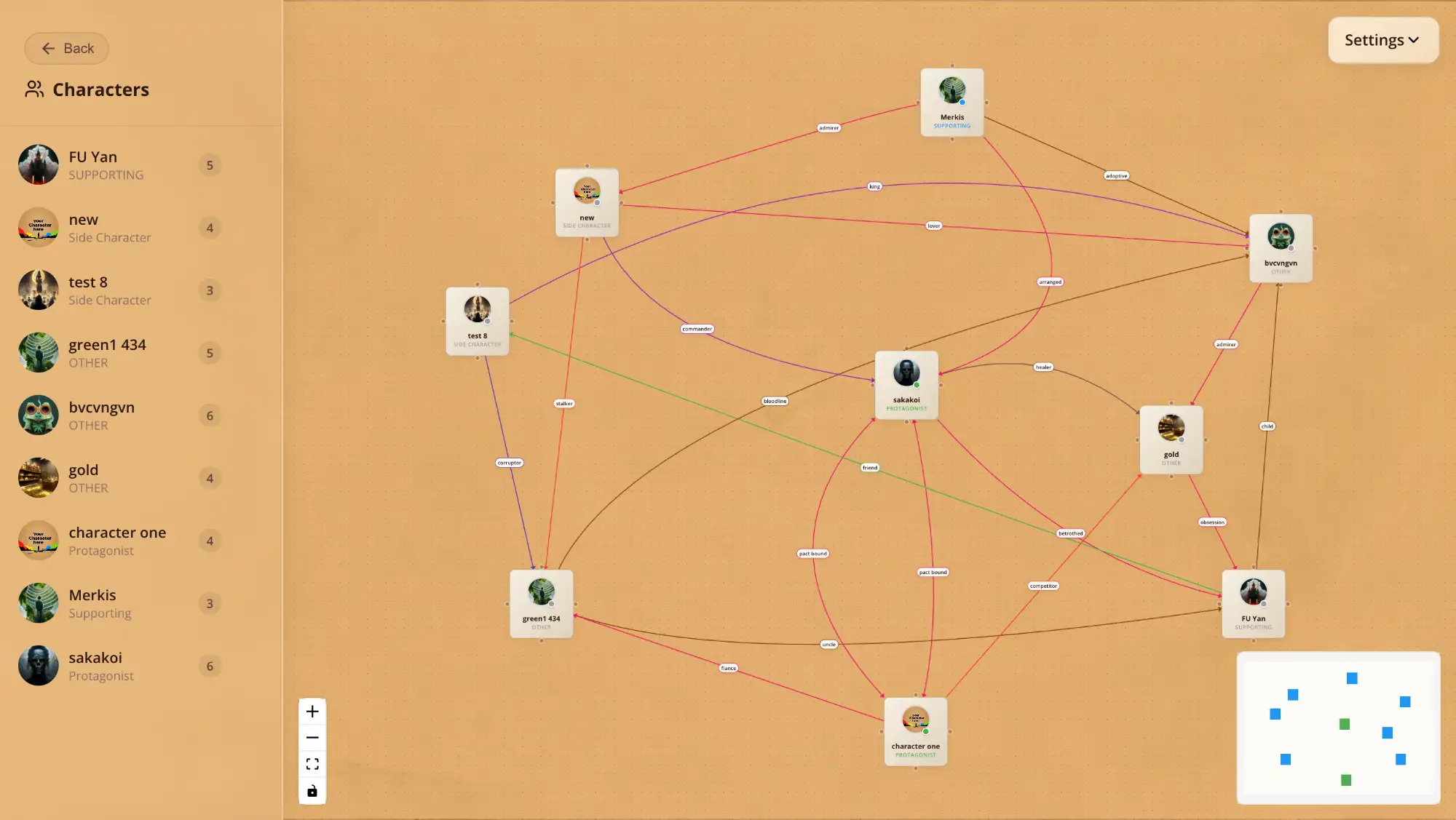
When your story world is organized with novel management tools, your brain is free to focus on storytelling.
That's one of the biggest shifts if you want to stay productive while writing a novel long-term.
5. Write in Sessions, Not "Free Time"
Waiting for the perfect chunk of time is how weeks disappear.
Instead of asking: "How long can I write today?"
Ask: "Can I write something right now?"
Two 20-minute sessions often beat one dramatic three-hour block that never happens.
Some writers scatter short sessions across the day:
One in the morning
One mid-afternoon
One before bed
Small, repeatable sessions win.
6. Lower the Bar Ridiculously
One trick that works surprisingly well:
Commit to writing just one sentence.
That's it.
No word count goal. No daily streak pressure.
Just one sentence.
Because starting is the hardest part. Once you begin, momentum usually takes over.
If writing feels heavy, shrink the entry point.
7. Track Progress Without Judging It
Tracking isn't about pressure.
It's about awareness.
Some weeks you'll write 5,000 words. Some weeks you'll barely touch 500.
That's normal.
Productive writers track patterns, not perfection.
You can track:
Sessions completed
Time spent in focus mode
Scenes finished
Character arcs progressed
The goal isn't guilt. It's clarity.
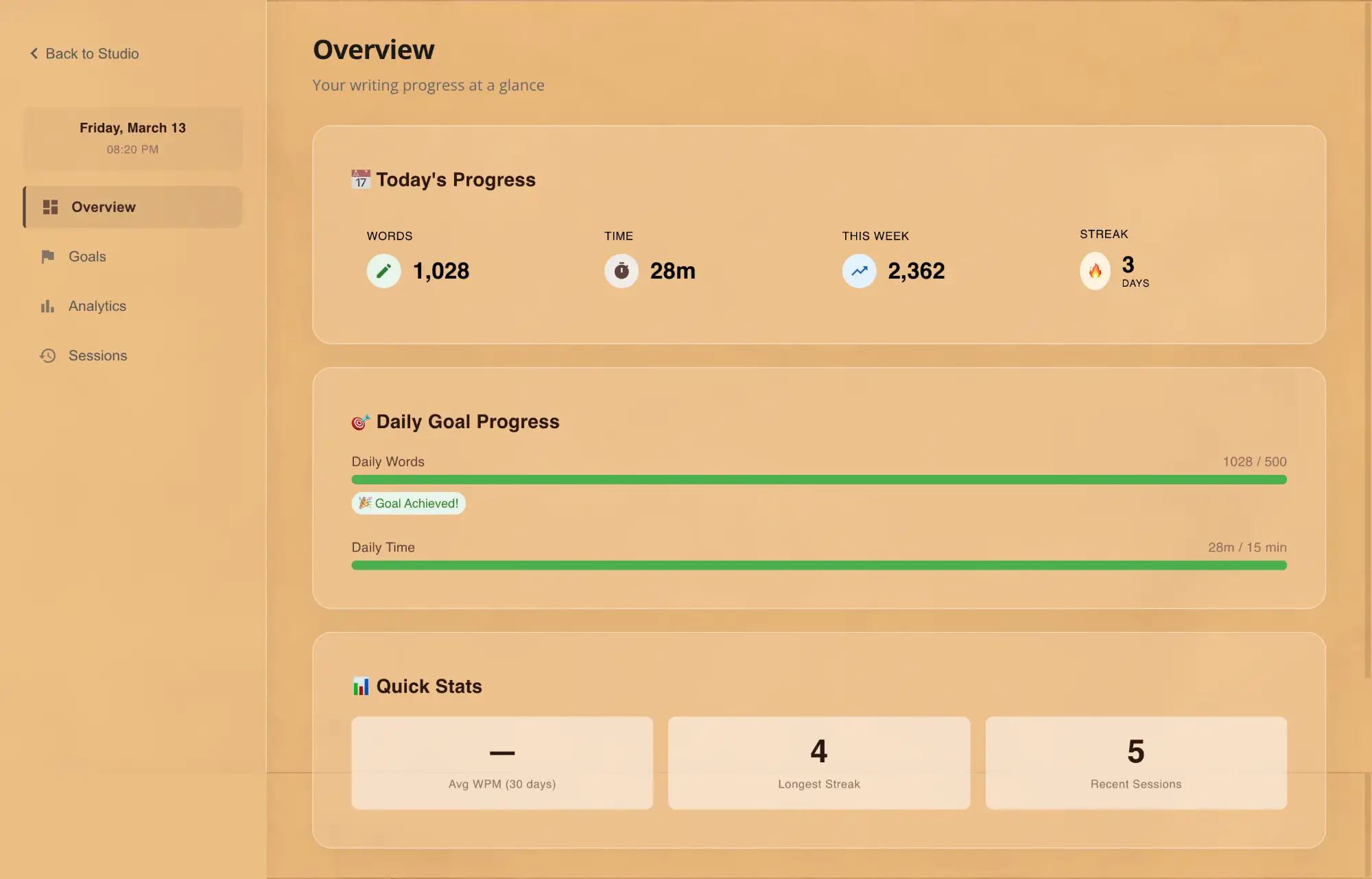
Track your writing patterns without judgment, see progress, not perfection.
Bonus: Try Accountability (Gently)
You don't need a writing cult or a 10-step productivity system.
But sometimes sitting "next to" someone, even virtually, helps.
Body-doubling or quiet co-working sessions can reduce distractions without adding pressure.
It's weirdly effective.
Writing doesn't have to be lonely to be focused.
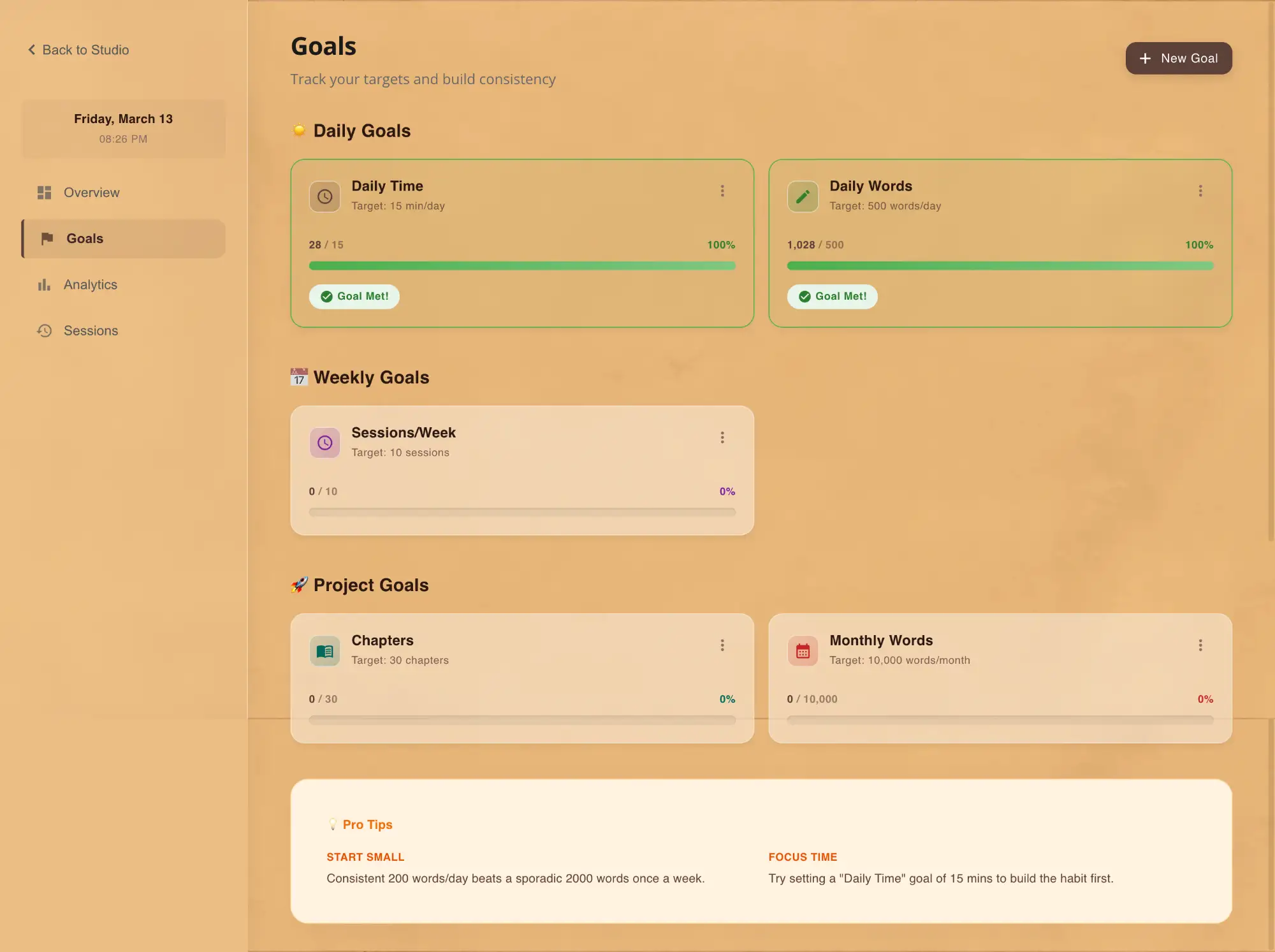
Set achievable goals and build sustainable writing habits.
Make Productivity Easier, Not Harder
Writers who stay consistent usually externalize their story world instead of keeping everything in their head.
Tracking sessions, character relationships, and writing progress reduces friction. And when friction drops, consistency increases naturally.
Staying productive while writing a novel becomes sustainable when your system supports you.
Not when you force yourself harder.
The Real Secret
Staying productive while writing a novel isn't about pushing harder.
It's about reducing friction.
When your story world keeps growing but feels harder to manage, staying productive while writing a novel usually comes down to organization rather than motivation.
Make it easier to start. Make it lighter to continue. Make it simpler to return to.
That's how novels actually get finished.
FAQ: Writing Productivity for Novel Writers
How many words should I write per day to finish a novel?
There's no magic number. Some writers aim for 500 words per day, others 1,000. What matters more than daily word count is consistency. A sustainable pace beats short bursts of overwork.
Do writing sprints actually help novel writers?
Yes. Short, timed sessions reduce pressure and improve focus. Many writers find 15 to 25-minute sprints more effective than long, open-ended writing blocks.
What is the best way to track writing progress?
Instead of tracking only word count, track sessions completed, scenes finished, or time spent in focused writing. This creates healthier momentum.
Why do I lose motivation halfway through my book?
Mid-draft burnout is common. It usually happens when the story becomes structurally complex and harder to manage. Improving story organization often restores clarity and energy.
Is staying productive while writing a novel about discipline?
Not entirely. Discipline helps, but most productivity issues come from mental overload. Reducing friction, clarifying next steps, and organizing your story world matter more.
What software helps writers stay organized while writing a novel?
Novel management software helps writers organize characters, chapters, and notes in one place. Visual tools for tracking relationships and plot threads reduce mental overload and improve productivity.
How do I stop feeling overwhelmed by my novel's complexity?
Externalize your story. Use character profiles, relationship maps, and linked notes instead of trying to remember everything. When your story world is organized outside your head, writing becomes less mentally exhausting.
Can I stay productive without writing every single day?
Absolutely. Daily writing works for some, but consistent sessions (even 3 to 4 times per week) beat sporadic marathon sessions. Focus on building a sustainable rhythm that fits your life, not someone else's productivity ideal.
How do I maintain consistency when life gets busy?
Lower your minimum viable session to something laughably small, like one sentence or 10 minutes. Showing up matters more than output. Small sessions compound faster than waiting for "the perfect day" that never comes.
What's the best productivity advice for first-time novelists?
Start by organizing what you know. Build character profiles before forcing scenes. Break your novel into small, clear next actions. Use tools that reduce mental load instead of adding to it. And remember: finishing badly beats perfecting endlessly.